
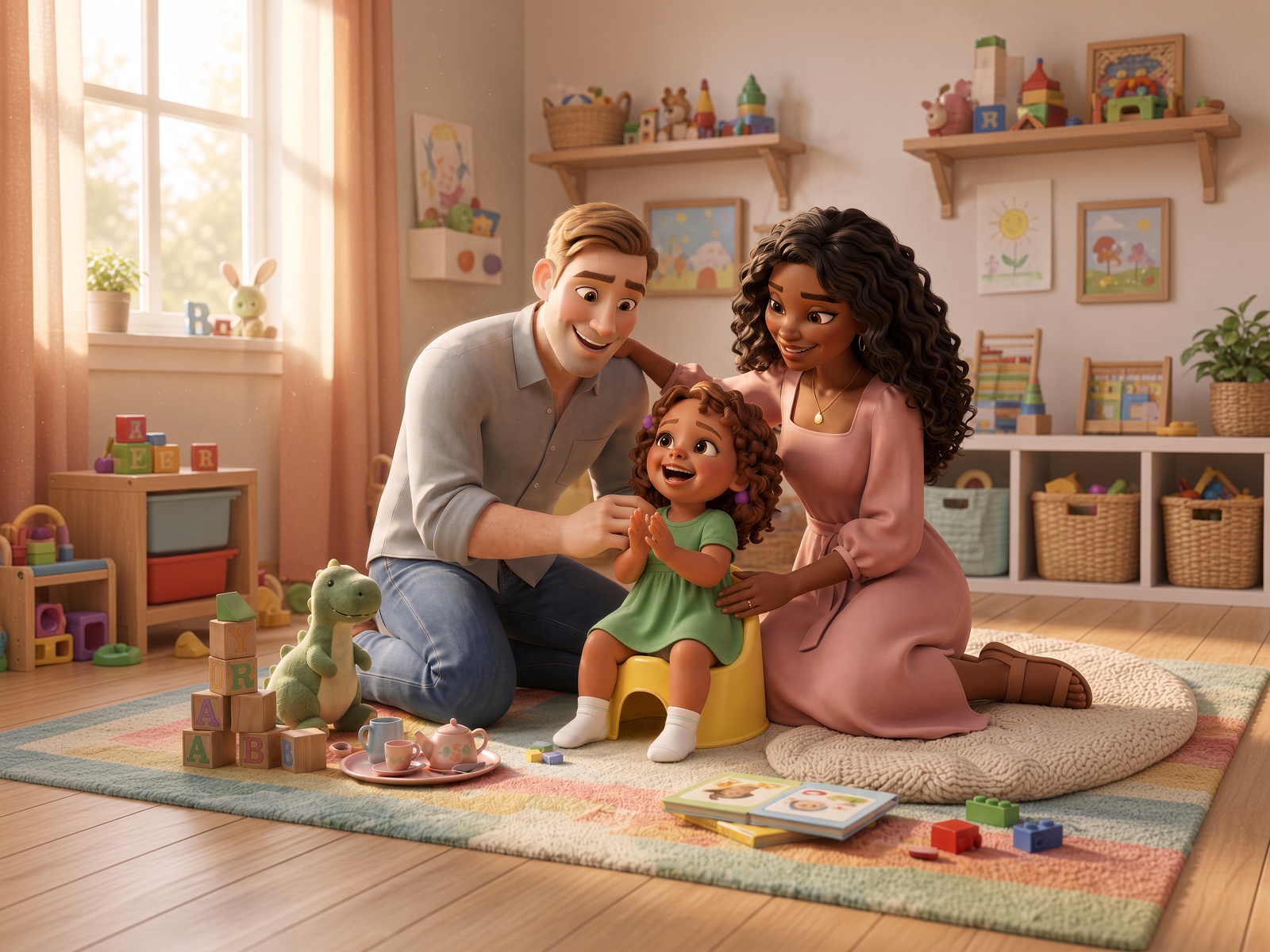
Is Your Little One Ready to Say Goodbye to Nappies?
Potty training often begins during toddlerhood (between 18 months and two-and-a-half years), but readiness varies considerably. Rather than focusing on age alone, consider your child's current abilities and comfort.
Signs Your Child May Be Ready:
- • Notices when their nappy is wet or dirty.
- • Tells you they need a wee/poo or communicates through gestures.
- • Shows curiosity about the toilet or copying adults.
- • Stays dry for longer periods during the day.
- • Hides, squats, or pauses playing when they need a poo.
- • Can help pull their trousers up and down.
- • Sits comfortably on a potty or child-sized toilet seat.
When Might It Be Better to Slow Down?
- • Becomes very distressed whenever the potty is mentioned.
- • Is experiencing painful bowel movements or hard stools.
- • Is unwell or experiencing a significant family change.
- • Finds the bathroom frightening, noisy, or uncomfortable.
- • Needs additional developmental or sensory support first.
Your Potty Training Shopping Checklist
Good news: you do not need an expensive collection of products to get started!
The Essentials:
☐ Stable potty or child-sized toilet seat
☐ Secure step stool for foot support
☐ Comfortable pants / training underwear
☐ Loose-fitting trousers (easy to pull down)
☐ Spare clothes for accidents
☐ Gentle wipes or toilet paper & soap
☐ Waterproof mattress protector & travel bag
Potty vs. Toilet Seat?
Potty: Ideal if they feel nervous about large toilets or want independent mobility around the house.
Toilet Seat: Great if they love copying adults/siblings and you have a sturdy footstep stool.
Tip: When using a toilet, ensure feet are firmly rested on a stool rather than dangling to aid bowel movements.
The Kids Renee Show Five-Step Potty Training Plan
4. Your First Three Days: A Practical Schedule
The first few days are an opportunity to practise, observe patterns, and build confidence. They are not a strict deadline!
Day 1: Introduce Routine
Explain pants, offer visits after waking/meals, praise attempts, and stay calm during inevitable accidents.
Day 2: Notice Patterns
Observe when your child usually needs a wee or poo. Encourage communication without turning visits into a battle.
Day 3: Build Confidence
Encourage pulling down trousers and handwashing. Try a brief, manageable outing with spare clothes packed.
5. The Potty Training Routine Chart & Tracker
| Time / Activity | What Parents Can Do |
|---|---|
| Morning wake-up | Offer potty and allow time to wake up properly. |
| Getting dressed | Practise pulling trousers up and down. |
| After breakfast | Offer a relaxed potty visit. |
| Before leaving home | Give an opportunity to use the toilet. |
| After lunch & naps | Offer the potty after waking or eating. |
| Before bed | Offer potty as part of the normal bedtime routine. |
Weekly Progress Tracker
| Day | Tried Potty | Wee in Potty | Poo in Potty | Told Adult | Washed Hands |
|---|---|---|---|---|---|
| Monday | ☐ | ☐ | ☐ | ☐ | ☐ |
| Tuesday | ☐ | ☐ | ☐ | ☐ | ☐ |
| Wednesday | ☐ | ☐ | ☐ | ☐ | ☐ |
| Thursday | ☐ | ☐ | ☐ | ☐ | ☐ |
| Friday | ☐ | ☐ | ☐ | ☐ | ☐ |
| Saturday | ☐ | ☐ | ☐ | ☐ | ☐ |
| Sunday | ☐ | ☐ | ☐ | ☐ | ☐ |
6. What Should I Do When My Child Has an Accident?
What to Do:
1. Stay calm and reassuring.
2. Help them get clean and dry promptly.
3. Say: "Your clothes are wet. Let's get comfortable. Next time we'll try the potty!"
4. Involve them gently (e.g. putting wet clothes in laundry).
What NOT to Do:
• Avoid shouting, showing disgust, or punishing.
• Don't call them "naughty" or compare with others.
• Never force long sitting visits on the potty.
• Never withhold fluids to prevent accidents.
7. Poo Problems: Constipation, Withholding & Potty Refusal
Some children learn to wee on the potty easily but fear pooing. Hard stools or painful bowel movements can lead to withholding and fear.
Hard/dry stools, straining, pain, pooing less frequently, abdominal discomfort, or hiding when pooing. Speak to your GP or health visitor if constipation persists.
8. Daytime vs. Night-Time Dryness
Night-time dryness depends on physical bladder development during sleep. Continue night-time nappies until they are consistently dry in the morning.
9. Out and About Checklist
Pack spare clothes, wipes, plastic bags, and a portable potty. Start with short outings and allow extra time without rushing.
10. Working With Nurseries & Childminders
Share the words and routines your child uses at home so caregivers can offer consistent, reassuring support.
11. Children With Additional Needs
Use visual picture sequences, sensory adaptations, footrests, and break down toileting into small, achievable steps.
12. Common Potty Training Questions
13 & 14. Healthcare Guidance & Research Corner
Consult your GP or health visitor if your child experiences persistent pain, constipation, or withholding. Studies (Mrad et al., 2021; Kroeger & Sorensen, 2009) show that consistent, child-oriented routines are effective.
15. Trusted Potty Training Resources
16 & 17. Our Potty Training Promise
No shame. No pressure. Just patience, practice, and plenty of encouragement. Let's celebrate the little steps that help our little ones grow!